
How to Check Criminal History in Lucama
No one local database contains every Lucama event. Confirm the responding agency, request its incident file, use WCSO for any county booking, and search eCourts for filed charges. Town Hall is valuable for routing when the current service arrangement is unclear, but it cannot certify a criminal judgment.
- Ask who responded, using the event date, location, and report number if known.
- Request the incident or arrest record from that agency, not from a general town file.
- Call WCSO for booking and custody information created at county detention.
- Search the North Carolina eCourts Portal with Wilson County selected.
- Ask the clerk for missing documents, a terminal search, or a certified Wilson-only result.
Keep the incident, booking, court case, and statewide fingerprint record distinct. Each can carry a different date and scope.
Lucama Records From Crossroads
Lucama's official site says the community began as Crossroads and now calls itself the Heart of Tobacco Country. The town reports an official population of 1,131 without stating the vintage. Those facts supply local context, but they do not justify assumptions about crime volume or a person's identity. In a small town, a similar name still needs a case number, date, and other lawful matching details.
The official Town of Lucama site lists town identity and contact information.
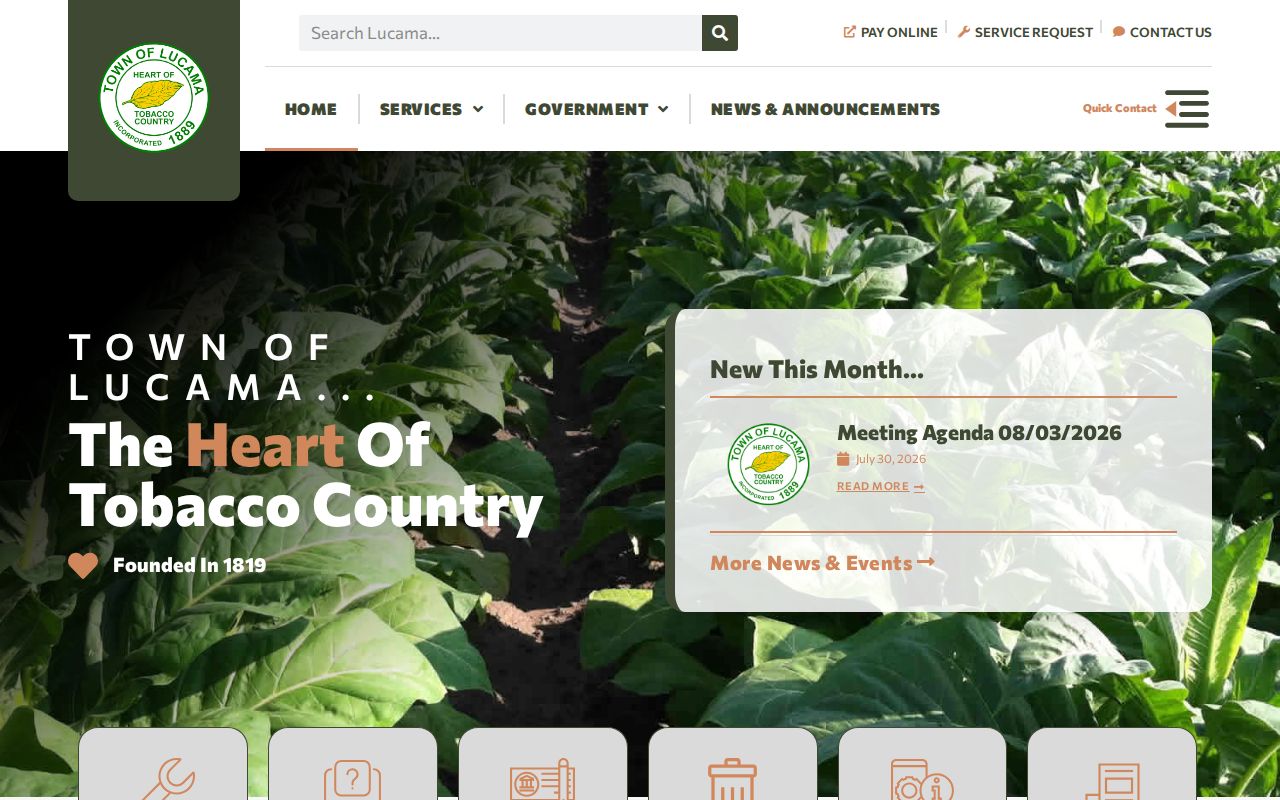
Town Hall is at 111 South Main Street, Lucama, NC 27851, 252-239-0560, and can help identify the proper local custodian.
The Lucama Police Department
The town advertises police protection, while a located 2021 county agreement assigned service to WCSO for three years beginning July 1, 2021. That term has elapsed. It cannot prove the 2026 arrangement. The current sheriff page still names a Lucama substation, so the safe instruction is to confirm who handled the event with Town Hall or WCSO.
No current official Lucama police-report portal, request form, copy fee, or municipal records app was found. If WCSO created the report, call 252-237-2118. If another town or state unit created it, request the record from that agency. Never borrow procedures from another Wilson County town.
Lucama Responding Agency Check
A written request should describe the desired record, date and time, location, responding agency if known, incident number, requester contact, and preferred delivery. Only the record description and enough locating facts are essential to finding the item, but contact details allow clarification. Ask for an existing record rather than a new criminal-history compilation.
| Question | Official Route | Key Input |
|---|---|---|
| Who answered? | Lucama Town Hall or WCSO | Date, place, incident number |
| Was there booking? | Wilson County detention | Name and arrest date |
| Were charges filed? | eCourts or county clerk | File number or name with Wilson filter |
| Is there a warrant? | WCSO, magistrate, or clerk | Identity and process number |
This sequence respects the time-sensitive service arrangement instead of treating an expired agreement as current fact.
Arrests and Bookings in Lucama
An arresting agency creates the arrest record. Wilson County detention creates the booking file when a person enters its custody. That record can show intake time, agency, preliminary charge, bond, status, and release. It is not proof of guilt, and an intake charge may change before or after filing.
Call WCSO at 252-237-2118 when an agency-linked custody interface is unavailable. Then search eCourts for the resulting judicial case. Absence from North Carolina Public Offender Search only means the person may not appear in the state correctional dataset; it does not disprove a local Lucama arrest.
Lucama Police Agreement Record Limits
A dated service agreement can be useful historical evidence, but not current proof after its term ends. The 2021 agreement explains why older Lucama reports may be WCSO records. A 2026 request still needs confirmation. Ask the town or sheriff which agency currently creates the report, then preserve the agency name when following the record forward.
This caution also applies to online pages that lag behind operations. A town statement that it offers police protection does not identify the individual custodian. Likewise, a sheriff substation does not create a separate court. The report holder, booking office, and clerk remain distinct even when one agency supplies patrol service.
For an older event, give both the date and the location when asking who provided service. The answer may differ across the agreement period. Keep the original agency name in later court or booking searches because it can help distinguish a Lucama report from another Wilson County matter with a similar name or date.
Note: Confirm the current Lucama responder before requesting a report; the located county agreement had a fixed term that has ended.
Lucama Municipal Court Records
Lucama has no separate municipal criminal court. North Carolina District Court in Wilson County handles misdemeanors, infractions, traffic matters, and early felony proceedings. Superior Court tries felonies after proper charging. Court records are found through eCourts, courthouse terminals, or the Clerk Criminal Section.
| Court Name | North Carolina District and Superior Courts in Wilson County |
|---|---|
| Case Types | District Court handles lower-level and early matters; Superior Court tries felonies |
| Lookup Route | eCourts Portal, public terminal, or clerk at 252-206-3000 |
| Docket Contents | File number, charges, events, status, disposition, judgment, and available financial data |
| Certified Search | AOC-CR-314 Wilson-only name search, $25 |
The courthouse counter at 115 E. Nash Street is open weekdays 8:30 a.m. to 12:30 p.m. and 1:30 p.m. to 5 p.m.
Mail requests and payments require equal care. A certified Wilson-only name search uses AOC-CR-314 and costs $25. The clerk accepts a money order or certified check by mail, not cash or a personal check. At the courthouse, cash, money order, certified check, and major cards are accepted, with card processing charges. These are clerk rules, not Lucama Town Hall fees.
Lucama Town Hall Record Limits
Town Hall can route a request but is not the custodian of a Wilson court judgment, jail booking, or SBI fingerprint history. Use it to identify the responding agency. Then send the request to the office that created the record. This avoids asking municipal staff to certify facts stored in state systems.
When a Lucama case is dismissed or ends without guilt, that outcome belongs in the court file. It does not automatically erase the police or booking history. The North Carolina expunction guidance explains the separate removal process.
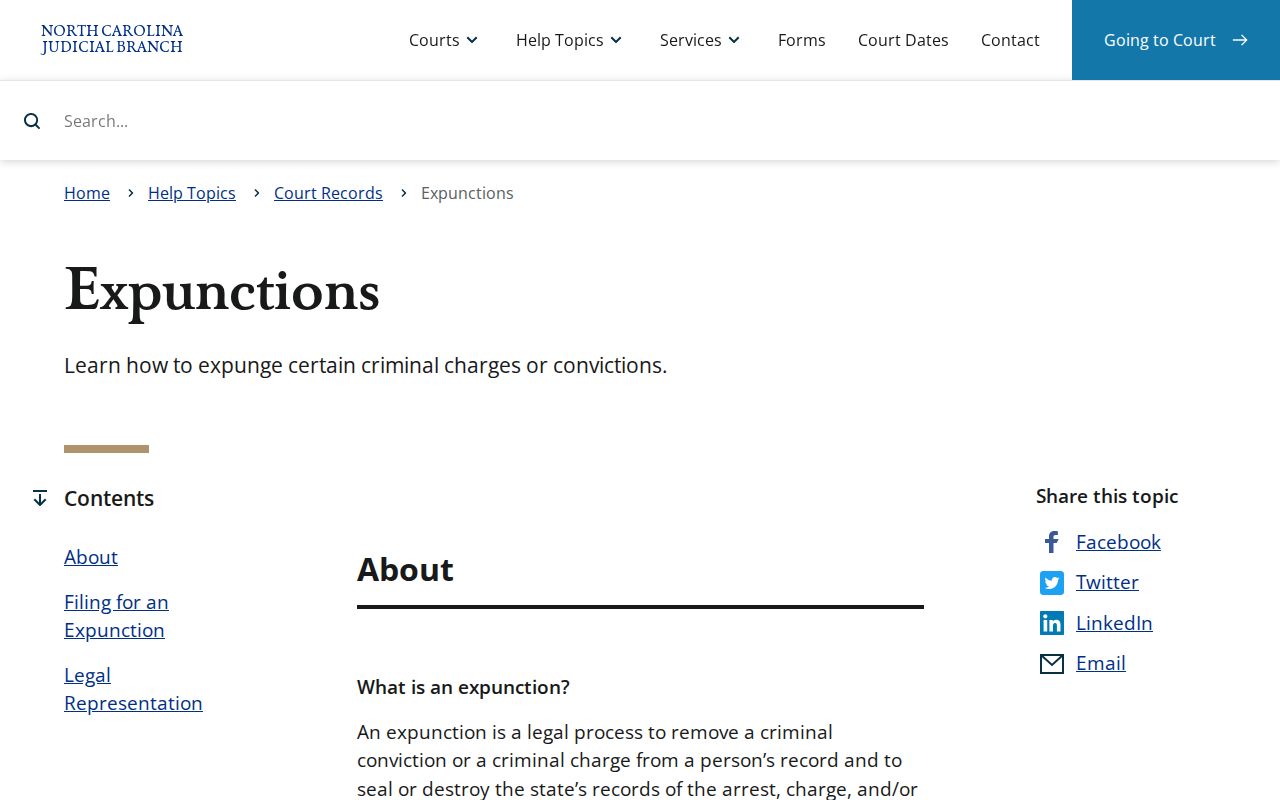
Eligibility is statute specific, and petitions for Lucama cases are filed with the Wilson clerk when Wilson is the charging county.
Where Lucama Records End Up
The responding agency keeps the incident file. WCSO holds any booking it creates. The clerk creates the prosecution file once charges are filed. Courts then report disposition information to the North Carolina State Bureau of Investigation for the fingerprint repository. Delays or matching errors can leave one layer behind another.
Record flow: Lucama responding agency › Wilson County Courts › North Carolina State Bureau of Investigation.
If an eligible record may be cleared, select the correct form for the actual outcome. The Judicial Branch expunction form catalog is the official starting point.
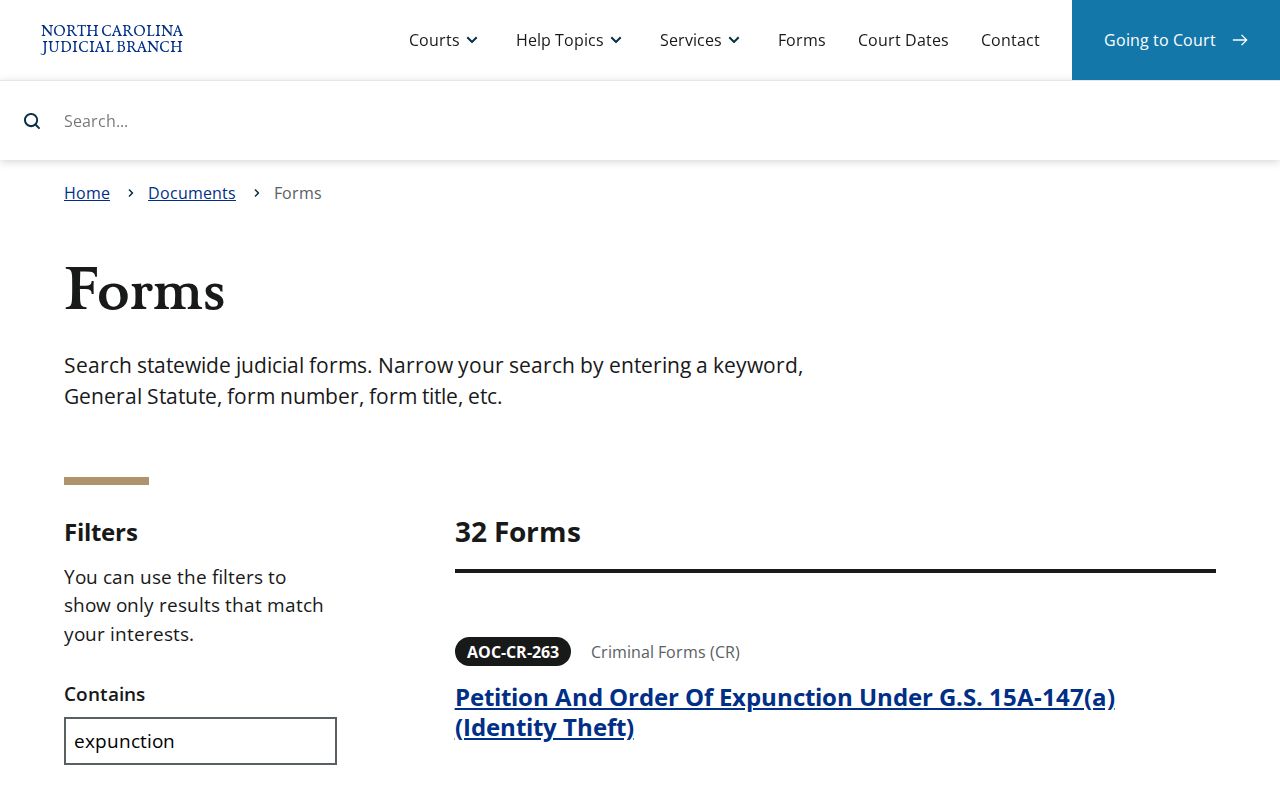
Form titles can look similar, so the case disposition and statute must drive the choice.
Lucama Restricted Criminal Records
Public access has firm limits. Juvenile counselor files are confidential, and retention rules do not turn them into adult public records. Victim, medical, identifying, sealed, and expunged material can also remain unavailable. A missing public result can reflect a restriction rather than a search failure.
The state's juvenile-record rules describe requester limits and retention.
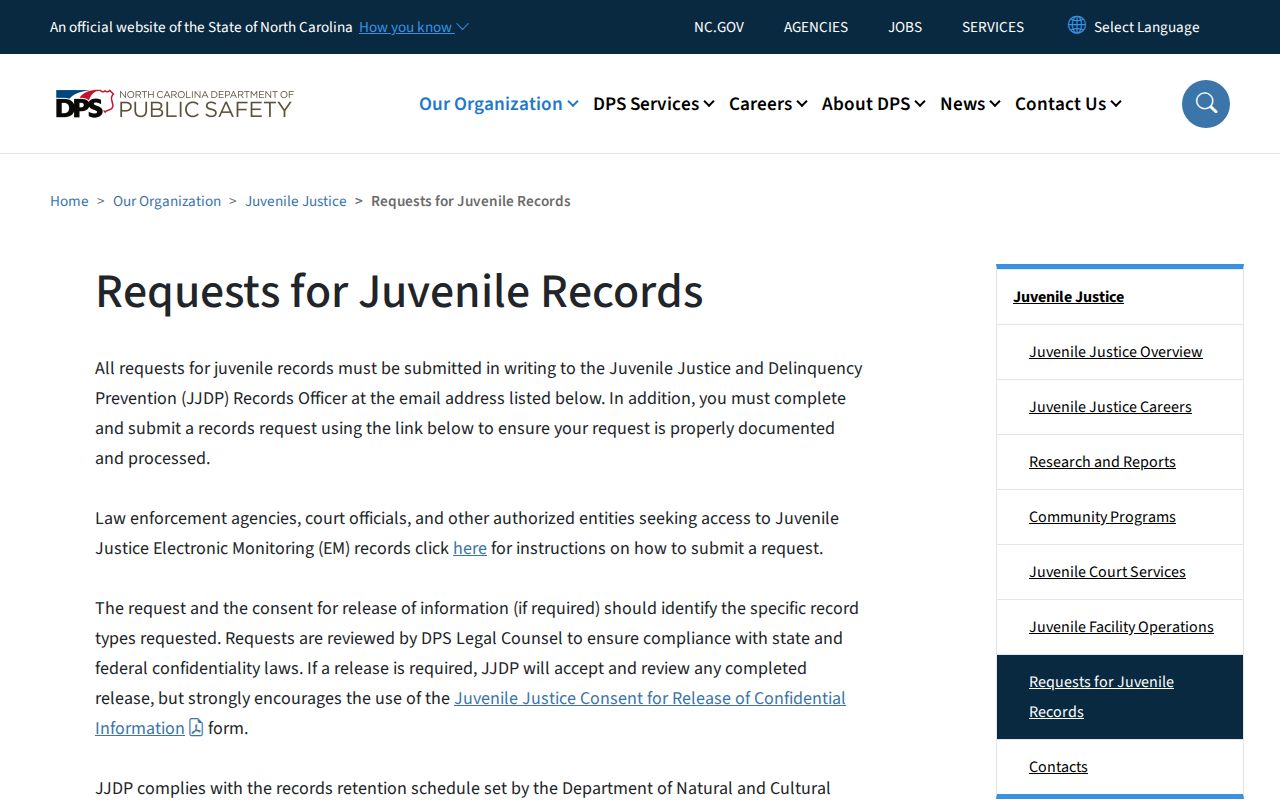
Those records should never be treated as a public substitute for an adult Lucama case search.
Lucama Expunction Record Follow-Up
An expunction order can require updates across more than one custodian. If a cleared Lucama entry still appears, obtain a certified order and identify whether the error sits in eCourts, SBI, NCDAC, or an agency system. The clerk cannot directly rewrite every downstream database.
North Carolina preserves a confidential state expunction file for limited statutory purposes. The G.S. 15A-151 confidential-file rule explains that restricted layer.
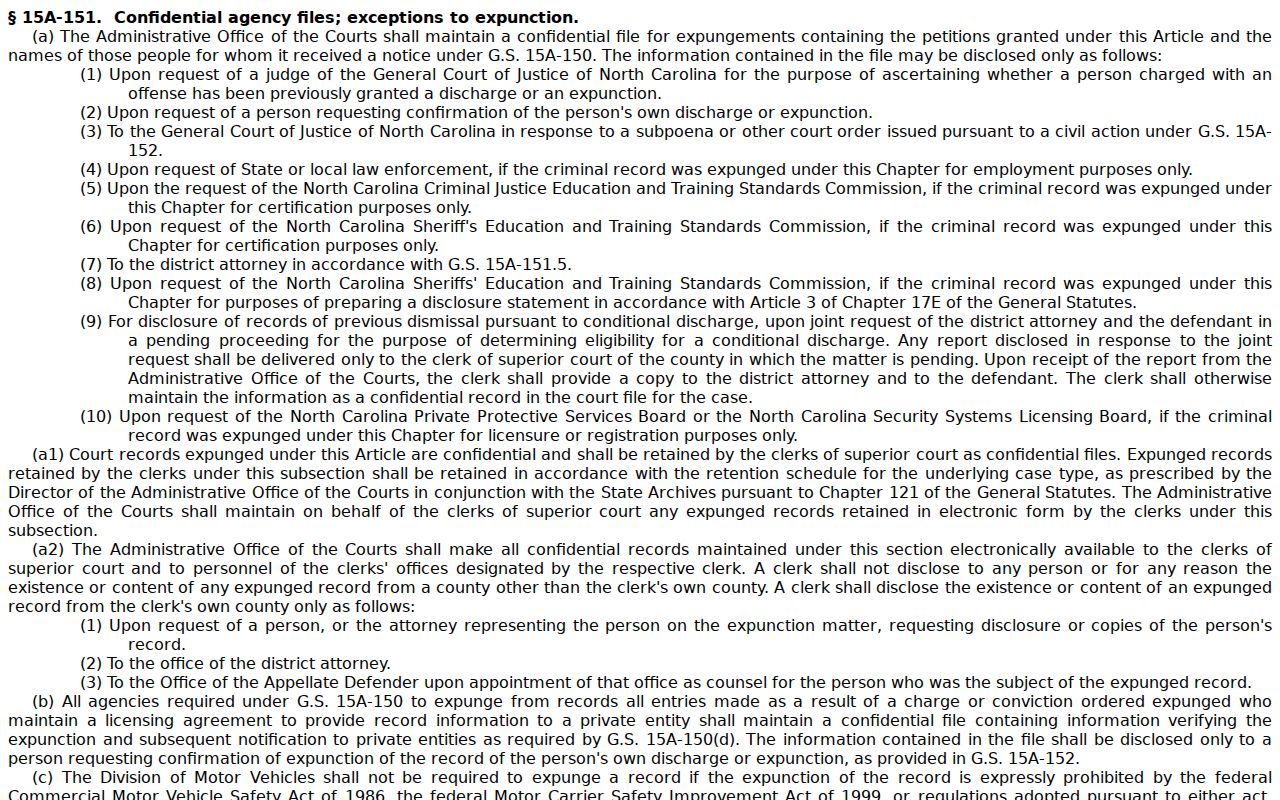
That limited file does not make an expunged record generally public again.
The general filing fee is $175, although dismissed or not-guilty matters generally have no fee unless dismissal followed a diversion or deferred prosecution. Some petitions need affidavits, record checks, district attorney notice, or a hearing. The clerk can explain filing and scheduling but cannot decide eligibility or give legal advice.
Lucama Registry Petition Records
Sex-offender registration is a separate record system. The sheriff collects and verifies county registrations while SBI publishes the public registry. A Part 2 registrant may be able to petition Superior Court after ten years under stated conditions, but North Carolina's base period is at least 30 years and relief is not automatic.
The official registry termination petition statute supplies the current conditions.
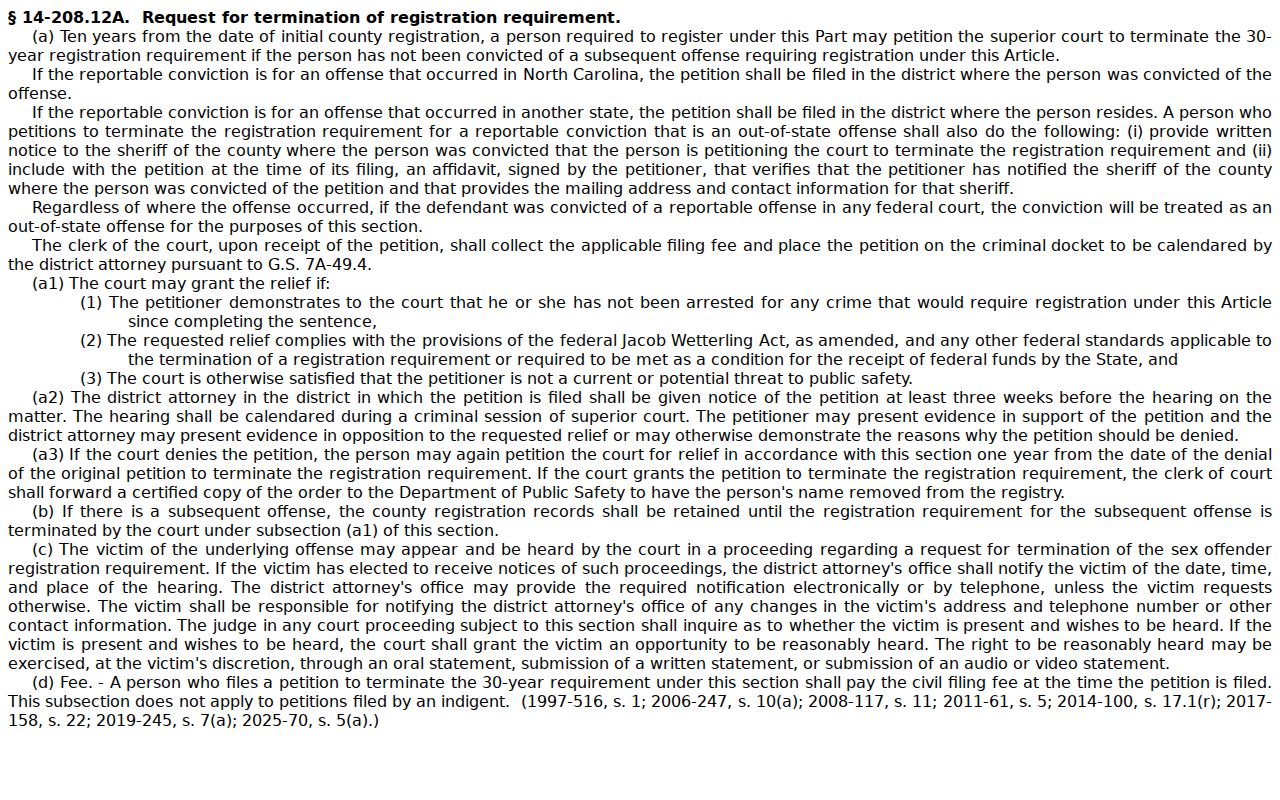
Town Hall does not decide registration status. Use WCSO and the SBI registry for Lucama safety questions.
A registry address is not live tracking and does not prove a new crime. Search the state registry for the public status, use NSOPW when the question crosses state lines, and report suspected noncompliance to WCSO. Registry information is for public protection, not confrontation, harassment, trespass, or private surveillance.
Public Access Rules
North Carolina Public Records Law covers existing agency records at reasonable times, but G.S. 132-1.4 protects criminal investigation and intelligence files while identifying basic incident and arrest facts that can be treated differently. G.S. 7A-109 generally opens clerk records unless another law restricts access.
Key statutes:
North Carolina Public Records Law governs requests to the agency that created the Lucama record.
G.S. 7A-109 generally provides access to clerk-held court files.
Chapter 15A governs criminal procedure and multiple expunction remedies.
Public does not always mean online. When a portal has no result, use the responding agency, WCSO, and Wilson clerk fallback chain instead of assuming no record exists.
Body-camera recordings follow a separate court-controlled disclosure process under G.S. 132-1.4A and should not be requested as an ordinary incident report. Investigative narratives, witness material, and evidence can also be withheld even when basic event facts are available. A focused Lucama request should therefore identify the precise existing item and allow the custodian to apply required redactions.