
Running a Sex Offender Check in Wilson County
The official starting point is the North Carolina Sex Offender and Public Protection Registry. The North Carolina State Bureau of Investigation maintains the public system from information county sheriffs enter. A person can search near a Wilson County address, search by name with a city or ZIP code, enter latitude and longitude, or use a Sex Registration Number. Each method answers a slightly different question. Address mode is suited to an area around a home, school route, or family gathering place. Name mode is better when the person is already known.
Begin with the least broad search that fits the safety concern. Check spelling and aliases, then read the full profile rather than relying on a map pin. The Wilson County Sheriff's Office can answer registration-office questions, while SBI controls the public site. The SBI registry service overview also connects readers to alerts and official search options.
The SBI overview illustrates the state service used for a Wilson County sex offender check.
That state role matters because the sheriff verifies local registration facts, but SBI publishes the statewide public view.
Wilson County Registry Record Keepers
Two offices share the work. A person who must register does so with the sheriff of the county of residence. In Wilson County, the registration contact is the Wilson County Sheriff's Office at 100 E. Green Street in Wilson, 252-237-2118. The official county material does not publish separate registration hours or a direct registry desk line. Call before visiting. The sheriff collects and verifies the local information and enters it into the state system.
SBI maintains the public registry and its search tools. This split explains why an online question and an appointment question may go to different offices. A map error or public-site issue belongs with SBI. A question about a Wilson County registration appointment or suspected noncompliance belongs first with the sheriff. Neither a city police department nor the county clerk replaces those registry functions.
Searching the North Carolina Sex Offender and Public Protection Registry
The registry presents four official paths. Choose the path tied to the facts already known, and avoid assuming that an empty result proves there is no record. A spelling difference, an old address, a boundary issue, or the wrong search mode can affect results.
- Open the SBI registry and read its conditions and lawful-use notice.
- Select an address, name and location, coordinate, or registration-number search.
- Enter the known fields and narrow by Wilson or the correct ZIP code when useful.
- Open a possible match and compare aliases, physical details, offense data, address, and status.
| Field Label | Type | Required | Notes |
|---|---|---|---|
| Search mode | Tabs or links | Yes | Near address, name and location, coordinates, or registration number |
| Last and first name | Text | Mode dependent | First name narrows a surname search |
| City or ZIP Code | Text or select | No | Use Wilson or a five-digit ZIP as appropriate |
| Address and radius | Text and select | Address mode | Use the live radius choices; do not assume a distance |
| Latitude and longitude | Numeric | Coordinate mode | For a known geographic point |
| Sex Registration Number | Text | Alternate | Strongest exact-identifier route |
The official registry form shows the active controls used for Wilson County searches.
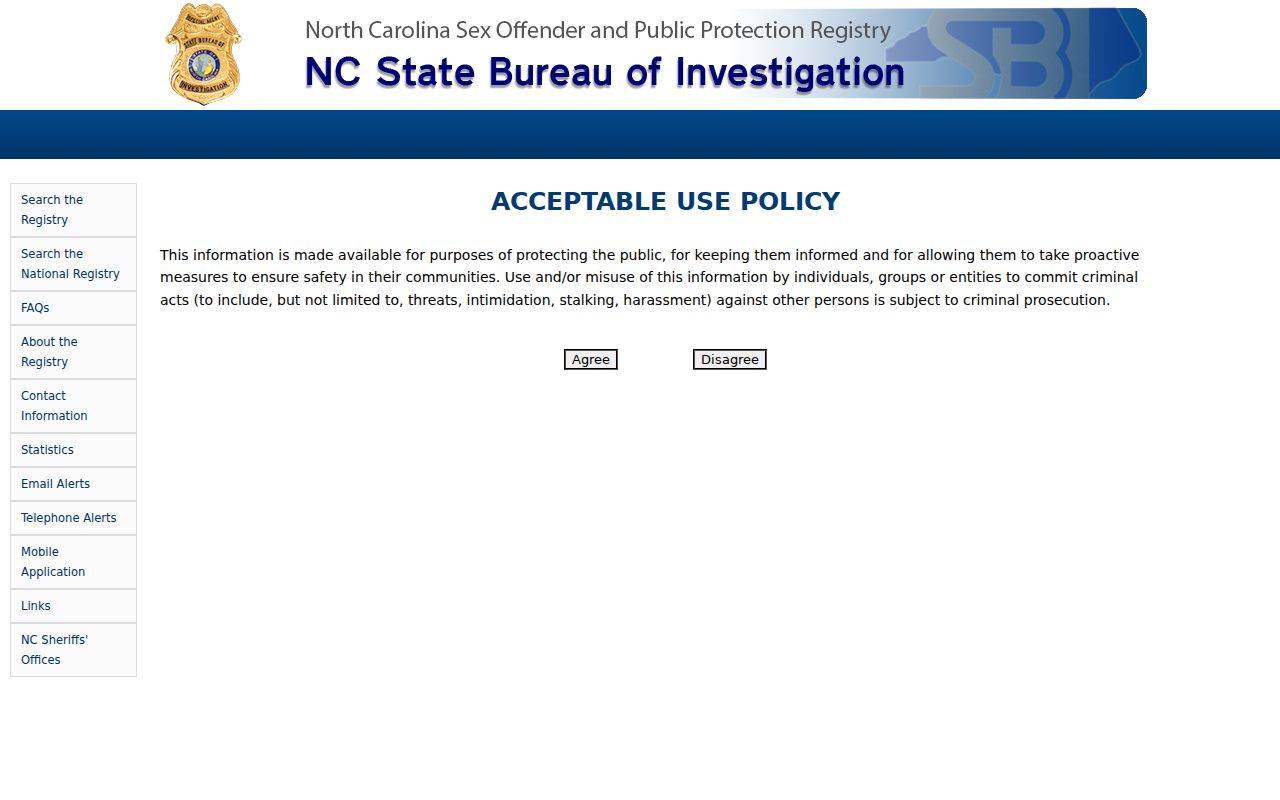
The interface offers more than a surname box, which helps readers choose a geographic or exact-number search when that is safer and more precise.
Wilson County Registry Map Limits
An address result is a registered address, not a promise that a person is present at that spot. It is also not real-time tracking. Use map results for awareness and planning, then open the profile to review status and verification information. A marker near the Wilson County line may warrant a search in the next county as well. The same applies when a person recently moved.
The registry history and scope page supplies context for what North Carolina publishes.
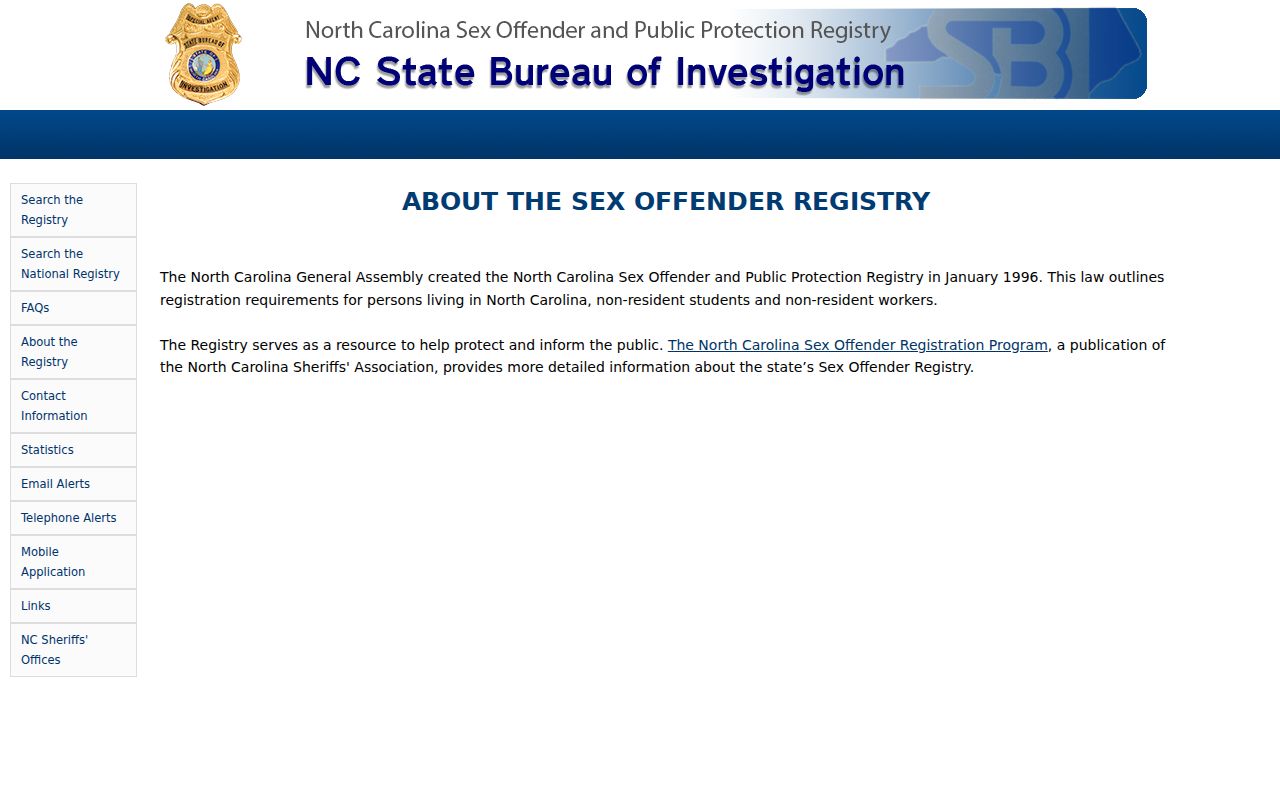
That scope is why a Wilson County map should be treated as one public-record layer, not a complete account of a person's current location.
Note: A missing map pin is weak evidence; retry another official search mode and check nearby jurisdictions before drawing a conclusion.
What a Registry Profile Shows
A public profile can contain the name and aliases, photograph, physical description, registered address, registration number, registering county, qualifying offense and conviction details, plus status or verification facts. North Carolina law also collects identifying fields such as height, weight, hair and eye color. Other lawful public details may include marks, tattoos, vehicle data, and school or work information. Display varies by record, so an absent field should not be filled by guesswork.
| Name and Aliases | Current name and reported former or alternate names used for matching |
|---|---|
| Photo and Description | Photograph and physical traits that help distinguish similar names |
| Registered Address | The address reported for registration, not live location tracking |
| Offense and Conviction | Reportable offense and available judgment facts |
| Registration Details | Registration number, county, category, and status information shown |
| Verification Information | Displayed compliance or verification facts, which can be subject to entry delay |
Read the status with the offense and conviction data. A registration listing concerns a reportable conviction and a current statutory duty. It does not prove a new offense. Likewise, a photograph or address should never be copied into a private tracking list or used to encourage confrontation.
Wilson County Registry Email Alerts
SBI offers email alerts as a calmer alternative to repeatedly saving profile details. Alerts can support ongoing community awareness when the state system reports a relevant change. They do not replace emergency services or the sheriff's registration work. If an alert raises a concern, return to the live profile and check its current status rather than relying on an old email alone.
The registry's county statistics interface also warns that totals are approximate. Sheriff entry, system delays, errors, and excluded pending statuses can change the count.
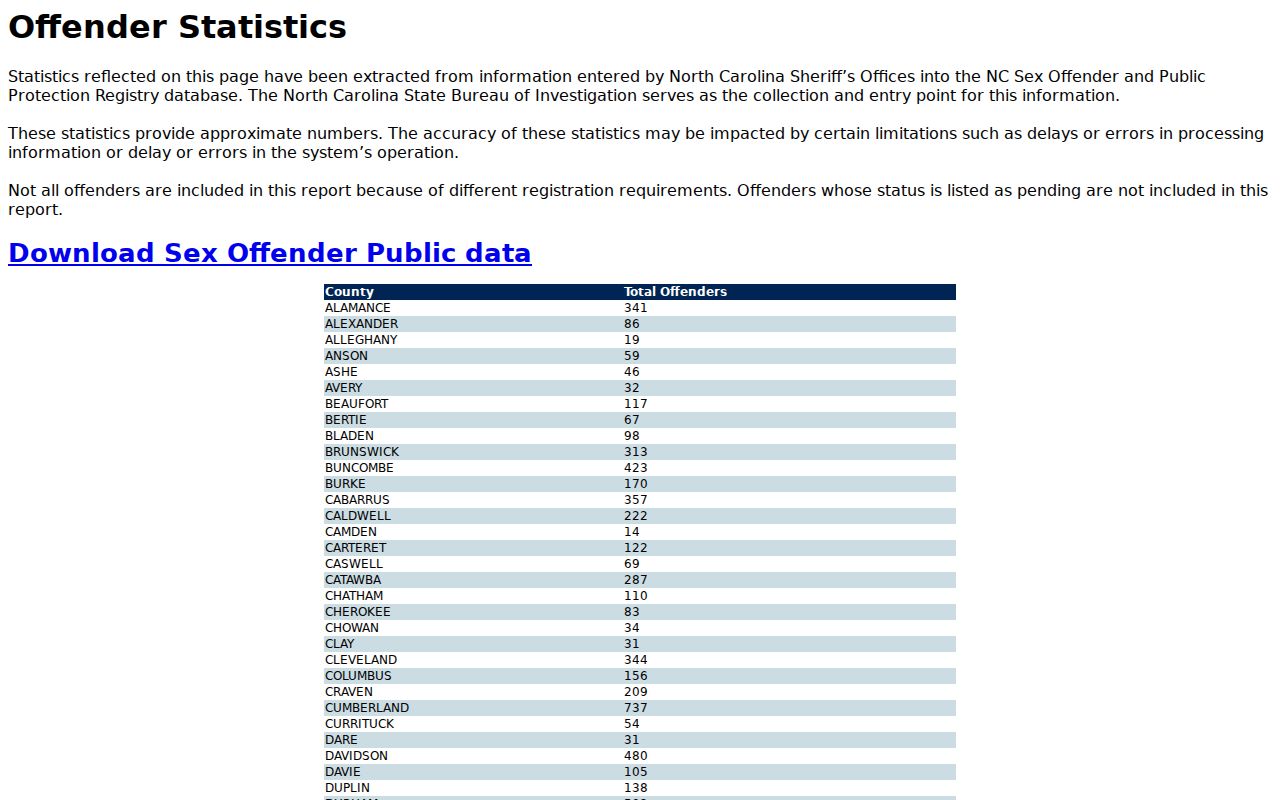
Those limits make a precise live search more useful for a specific safety question than repeating an undated county total.
Registration Requirements and Levels in North Carolina
North Carolina uses statutory categories rather than a simple public three-tier label. A Part 2 reportable offender has a base registration period of at least 30 years from initial county registration. After ten years, that person may petition Superior Court under G.S. 14-208.12A if every condition is met. Filing a petition does not end the duty. Recidivists, people convicted of aggravated offenses, and those classified as sexually violent predators under Part 3 generally face lifetime registration rules.
| North Carolina Category | Base Duration | Termination Route |
|---|---|---|
| Part 2 reportable offender | At least 30 years | May petition Superior Court after ten years if statutory conditions are met |
| Part 3 recidivist, aggravated offender, or sexually violent predator | Lifetime | Part 3 governs; do not assume the ordinary petition route applies |
A new North Carolina resident generally registers within three business days after establishing residence or after being present for 15 days, whichever comes first. Other three-business-day rules apply after release or arrival, and a reportable conviction without active imprisonment can require immediate action. Work and school duties can apply to nonresidents as the statute provides.
The official North Carolina registration law contains the current duties and categories.
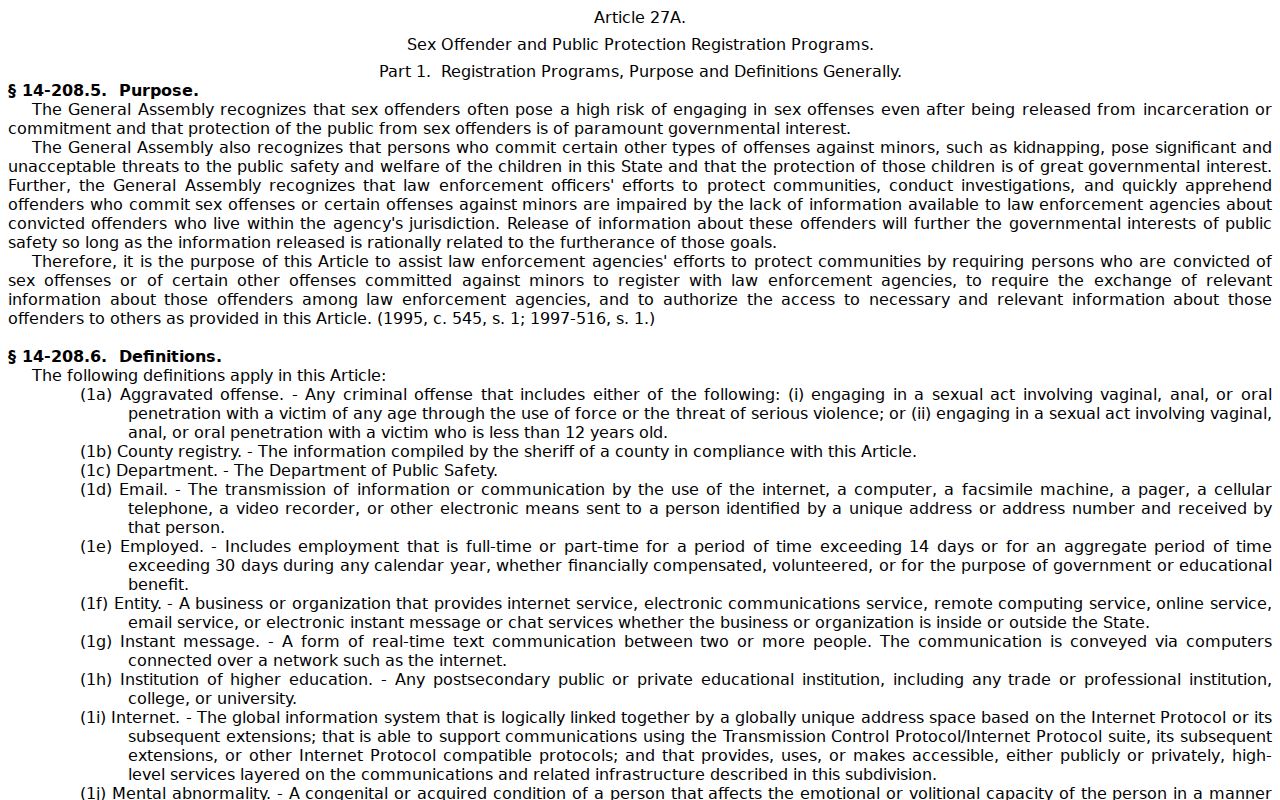
The statute should be checked directly because session changes can affect duties, filing fees, and petition rules.
Wilson County Registry Searches Beyond NC
A Wilson County search can miss a person whose public registration belongs to another state or territory. The U.S. Department of Justice's National Sex Offender Public Website federates participating public registries and is the official next step when a safety check crosses state lines. Search terms and returned detail depend on the contributing jurisdiction, so follow the source-registry link for the authoritative profile.
The national interface demonstrates that cross-border layer.
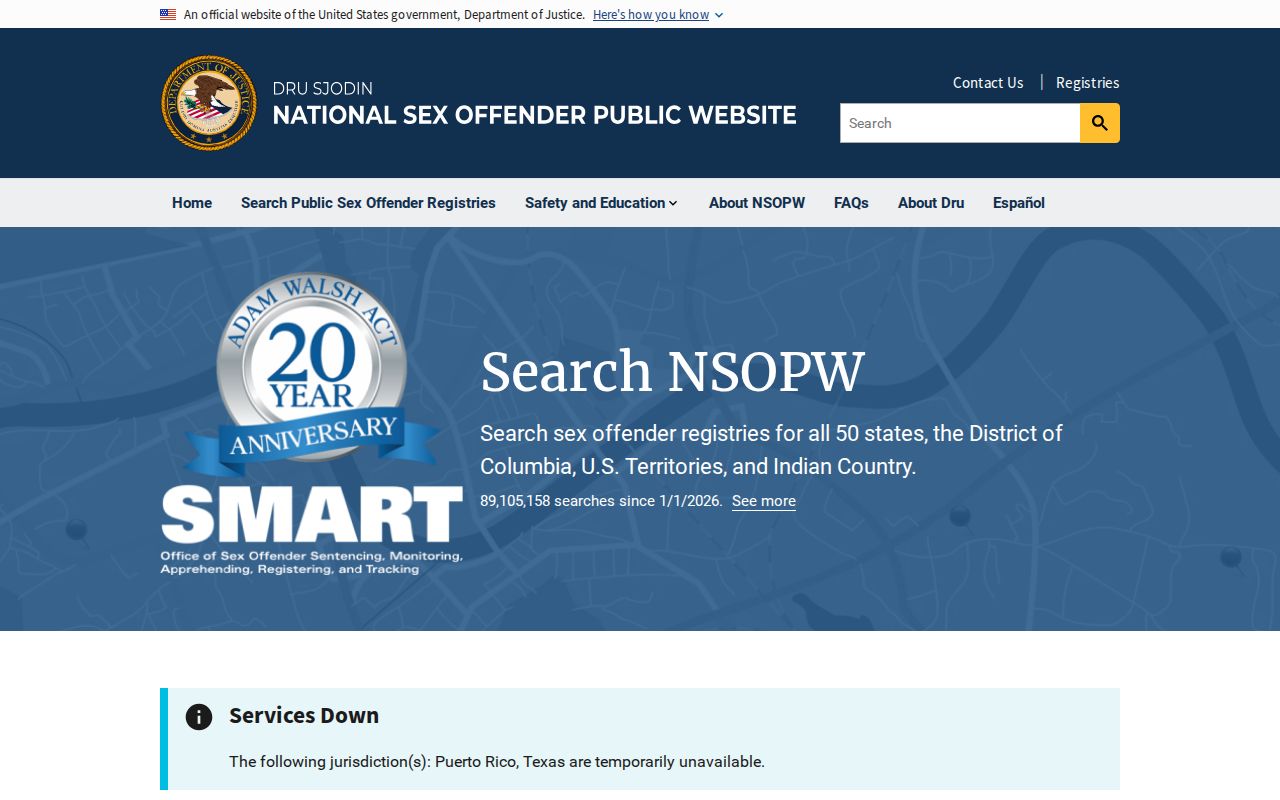
NSOPW extends the geography, while SBI remains the source for a North Carolina entry and WCSO remains the local registration contact.
Wilson County Registry Count Limits
A county total can look exact while still carrying known limits. SBI explains that sheriff-entered data can be delayed or contain errors, and pending registrants may not be included in published statistics. A count also says nothing about a person's current presence at a particular address. For a concrete concern, use the actual address or name search and review the profile status.
Wilson County residents should also avoid equating registration with a new local crime trend. Registry duties arise from qualifying convictions and can last decades. The public list measures an administrative status, not the number of current offenses. That distinction keeps a community-safety search tied to what the official data can truly establish.
Lawful Use and Community Notification
Registry information exists for public protection, safety planning, and informed community awareness. It may support a family discussion, a review of an area around an address, or a report to law enforcement when there is a good-faith concern about compliance. Suspected noncompliance should go to WCSO at 252-237-2118 or to SBI. Call 911 only for an emergency. Do not confront a listed person, enter private property, or treat an old screenshot as current proof.
Use registry records lawfully. Do not threaten, harass, intimidate, trespass, or encourage vigilantism. Misuse can lead to criminal or civil consequences under North Carolina law.
A public profile reports statutory registration facts. It is not permission to contact a registrant or household. It is not a live movement feed. Verify a material fact with the office that maintains it and preserve the safety purpose of the registry.